



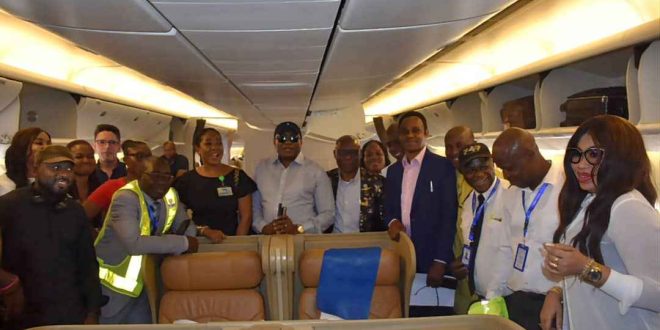
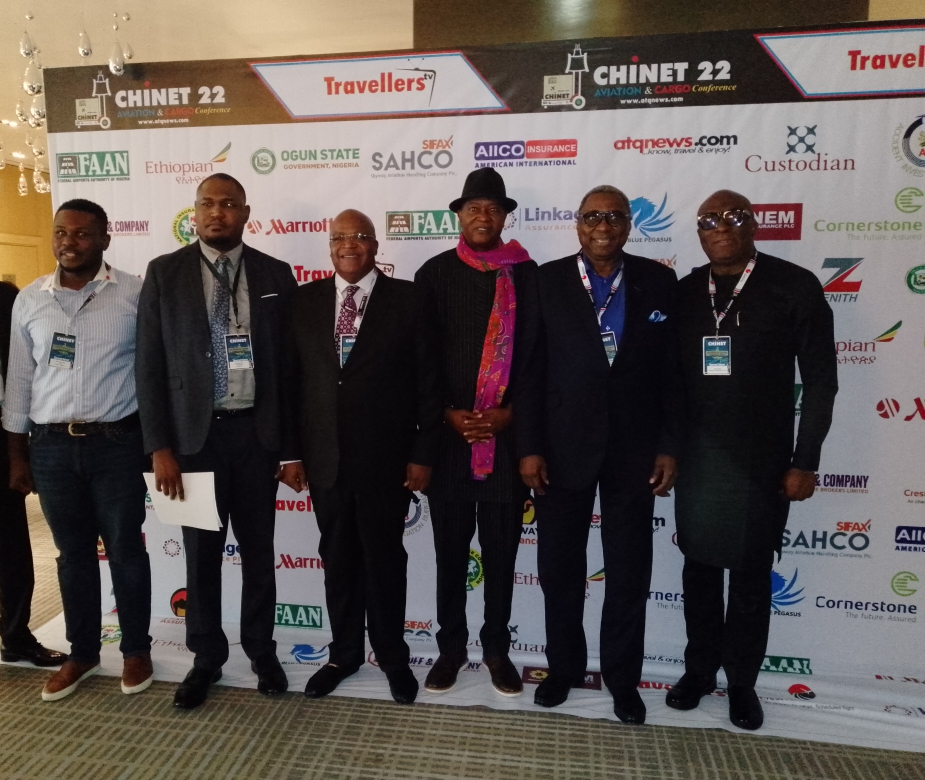



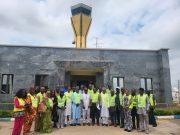







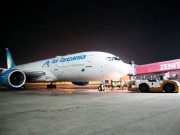




Prof. John Lamola, the Chief Executive Officer of South African Airways was recently in Lagos to visit travel trade partners and share his vision for the airline as well as highlight the significance of the Lagos – Johannesburg route. Mr. Ewos IRORO, Editor, Travel & Business News was on hand to capture the moment.
Q: How does SAATM fit into SAA’s growth strategy?
The Single African Air Transport Market (SAATM) is fundamental to our growth strategy. SAA is a proponent of SAATM because a liberalised African sky is essential for unlocking the continent’s potential. It allows airlines like SAA to operate more freely between African nations, facilitating route expansion, increased frequencies, and ultimately, greater connectivity. For our Nigerian partners, SAATM should translate into more efficient operations on routes like Lagos-Johannesburg, potentially allowing for increased capacity and schedule optimisation over time. It underpins our ambition to be a leading carrier connecting Africa, and Nigeria is a critical node in that network. We see SAATM as an enabler for strengthening the Lagos route and potentially exploring other connections as market conditions allow.
Q: What is the airlines fleet recovery strategy?
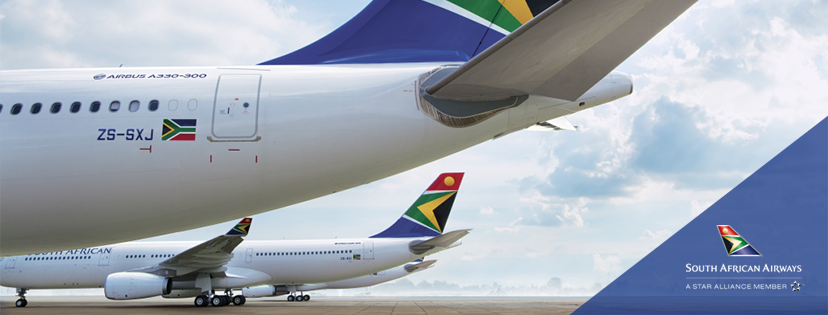
Our fleet strategy post-business rescue is built on prudence, efficiency, and demand-driven growth. We started with a smaller, more focused fleet, primarily utilising modern, fuel-efficient Airbus A320 family aircraft for our short-to-medium haul routes, including Lagos, and suitable wide-body aircraft like the A330 for longer routes. The recovery involves gradually and cautiously adding aircraft – primarily through leasing arrangements to maintain flexibility – as routes prove sustainable and profitable. We won’t return to the oversized fleet of the past. Instead, we’re focused on having the right aircraft for the right routes. Ensuring we have reliable, comfortable, and appropriately sized aircraft for the vital Lagos-Johannesburg service is a top priority within this measured growth plan.
Q: What plans do you have for the Nigeria market?
Nigeria, and specifically Lagos, is not just another destination for SAA; it is a strategic pillar of our network. Our plans are focused on:
* Consistency and Reliability: Ensuring the Lagos-Johannesburg service remains dependable and punctual, providing a service you and your clients can trust.
* Optimised Connectivity: Leveraging our Johannesburg hub to offer seamless connections for Nigerian travellers to our Southern African network and other intercontinental destinations within the Star Alliance network.
* Partnership: Strengthening our relationship with you, the Lagos travel trade. We need your insights and support to tailor our offerings and promotions effectively.
* Sustainable Growth: As our fleet grows and market conditions permit, we will continually evaluate opportunities to enhance our offering, potentially including frequency increases or schedule adjustments to better serve market demand. The Lagos route is consistently reviewed for performance and potential enhancement.
* Product: Ensuring our onboard product meets the expectations of the discerning Nigerian traveller.
The Nigerian market, especially Lagos, is critical to SAA’s present and future, and we are committed to serving it well and strengthening our mutual success.
“As CEO of South African Airways, I deeply value our relationship and recognise Nigeria, particularly Lagos, as a vital market and a cornerstone of our African network strategy. Your success is intertwined with ours, and the Lagos-Johannesburg route is central to our plans.”
Q: What is your vision for the airline?
My vision for SAA is to re-establish it as a respected, reliable, sustainable, and profitable airline. We aim to be a leading carrier in Africa, proudly connecting South Africa with the continent and key global destinations. This vision includes:
* Operational Excellence: Running a safe, punctual, and efficient airline.
* Customer Focus: Providing warm South African hospitality and excellent service.
* Network Strength: Maintaining key routes like Lagos-Johannesburg while strategically expanding where it makes financial sense.
* Financial Stability: Operating profitably to ensure long-term viability.
* Strong Partnerships: Leveraging alliances like Star Alliance and exploring deeper collaborations within Africa.
For Nigeria, this vision means SAA aims to be the carrier of choice for travel between Nigeria and Southern Africa, offering a reliable bridge and excellent onward connectivity.
Q: What challenges have you seen and what are the prospects for the airline?
Emerging from business rescue presented immense challenges – rebuilding trust, managing costs in a high-inflation environment (especially fuel), navigating complex geopolitical factors, and intense competition. Re-establishing market presence and rescaling operations carefully are ongoing tasks. Securing the right fleet mix at competitive rates is also a constant focus.
The prospects are encouraging. We have a strong, recognised brand, a strategic hub in Johannesburg, dedicated employees, and the backing of being a national carrier. We are now leaner and more focused. The demand for air travel within Africa and between Africa and the world is growing. Key routes like Lagos-Johannesburg demonstrate consistent demand, forming a solid base for rebuilding. Our membership in Star Alliance is a significant asset. We are optimistic that by focusing on efficiency, customer service, and strategic routes, SAA will achieve sustainable success. The Nigerian market’s resilience and potential are central to this optimistic outlook.
Q: What is SAA’s sustainability goal?
Sustainability is integral to our future. Our goals encompass environmental, social, and governance (ESG) aspects. Environmentally, we are committed to reducing our carbon footprint through:
* Operating fuel-efficient aircraft.
* Optimising flight paths and operational procedures.
* Implementing waste reduction programs onboard and on the ground.
* Actively exploring and preparing for the integration of Sustainable Aviation Fuels (SAF).
Socially and governance-wise, we focus on ethical practices, compliance, and contributing positively to the communities we serve.
We understand that sustainability is increasingly important to travellers, including those from Nigeria, and we aim to be a responsible choice.
Q: How do you hope to integrate the use of SAF to reduce carbon emissions?
Sustainable Aviation Fuel (SAF) is the most significant lever the industry has to decarbonise in the medium-to-long term.
Our approach involves:
* Collaboration: Working with industry bodies (like IATA), fuel producers, airports, and governments to understand SAF availability, scalability, and cost implications, particularly within the African context.
* Feasibility Assessment: Continuously assessing the economic and logistical feasibility of incorporating SAF blends into our fuel supply, starting potentially at our main hub in Johannesburg.
* Advocacy: Supporting initiatives that aim to increase SAF production and reduce its cost premium.
* Gradual Integration: As SAF becomes more accessible and economically viable in our region, we plan to gradually integrate it into our operations. This is a long-term commitment, but planning starts now. Ensuring the long-term environmental viability of critical routes like Lagos-Johannesburg requires us to be proactive in exploring SAF adoption.


